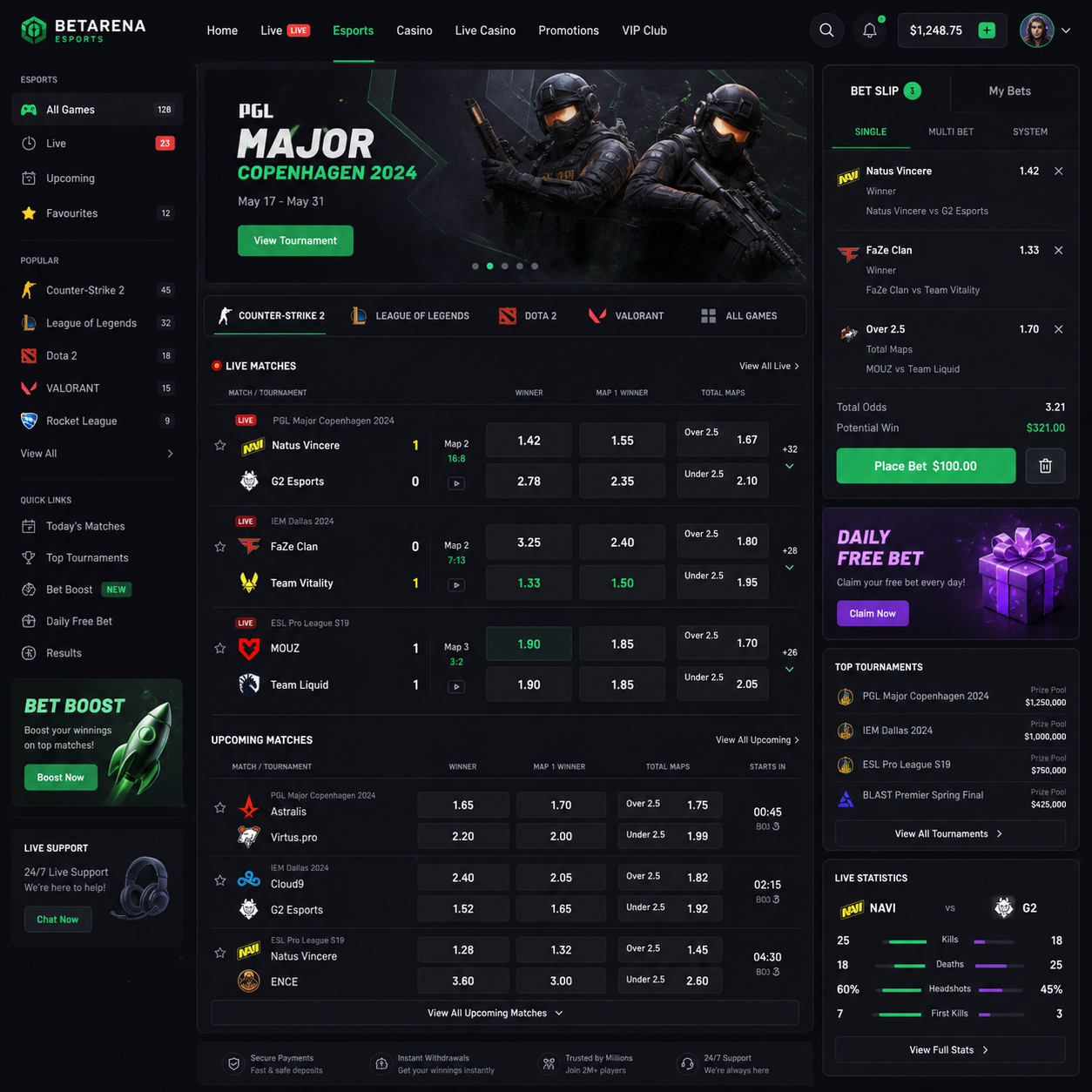
Understanding Sports Betting Odds: A Casual Bettor's Guide for Esports Fans
You've been watching esports for years. You know the meta, you track the rosters, and you have strong opinions about which team is going to win the next major. At some point, the idea of placing a small bet on a match starts to feel natural. But then you open a sportsbook and see numbers like +250, 1.75, or 3/1 — and suddenly it's less obvious.
This guide cuts through the confusion. By the end, you'll know exactly what those numbers mean, how to estimate your potential payout in seconds, and how to approach esports betting as the entertaining hobby it should be.
What Are Betting Odds and Why Do They Matter?
Betting odds are numbers that tell you two things at once: how likely a sportsbook thinks an outcome is, and how much you'd win if you're right. They are the language of every wager, whether you're betting on a CS2 Major or a football cup final.
Think of odds as a price tag on an opinion. When a bookmaker sets odds for a League of Legends match, they're essentially publishing their view of each team's chances. The better the team, the lower the potential payout — because fewer people need convincing to bet on them. A weaker team carries higher odds because backing them is a bigger risk, and the reward reflects that.
Understanding odds matters because it's the difference between placing a bet because the number "looks good" and placing one because you've actually assessed the value. Even as a casual bettor, knowing what the numbers represent helps you enjoy the experience more and avoid obvious mistakes.
The Three Main Odds Formats Explained
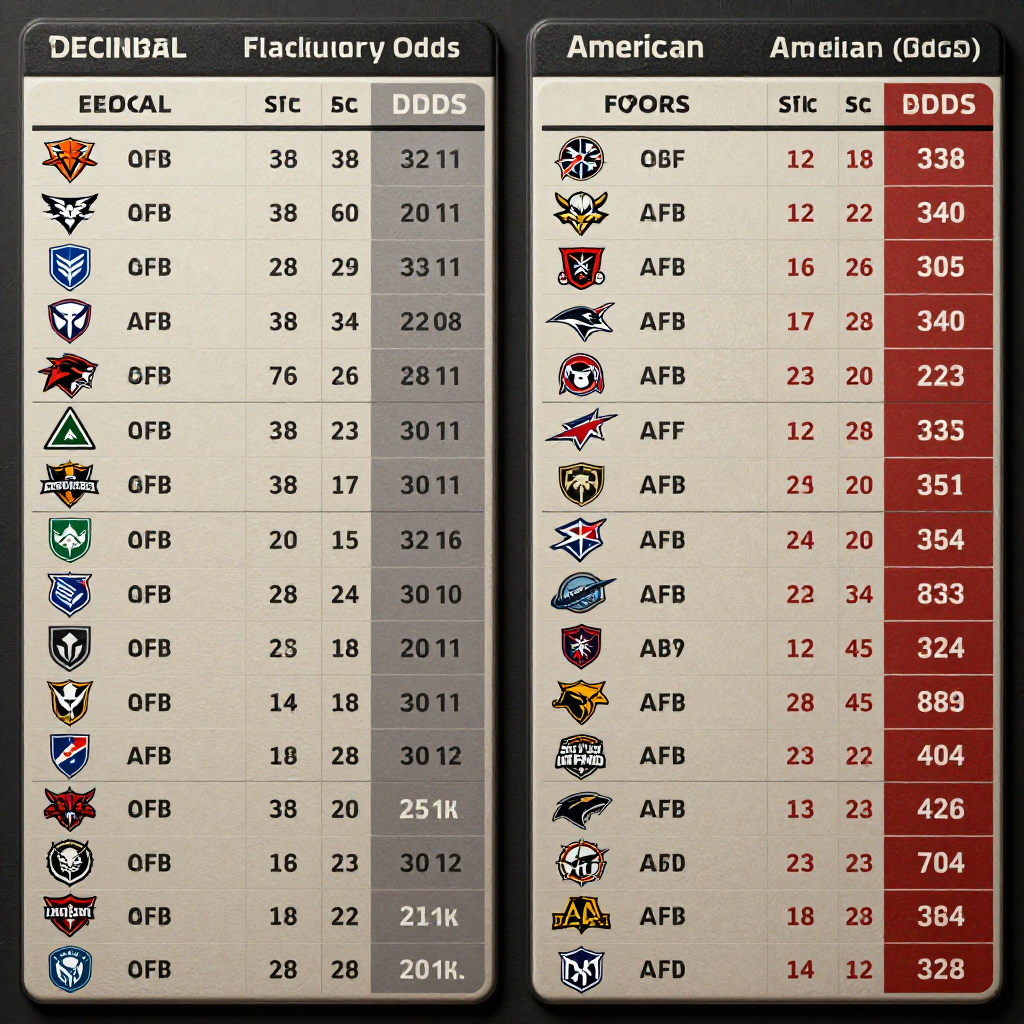
There are three odds formats you'll encounter across different sportsbooks: decimal, fractional, and American (moneyline). Most platforms let you switch between them in settings, but knowing all three means you're never caught off guard.
Decimal Odds
Decimal odds are the most beginner-friendly format, and they're common on European and esports-focused platforms. The number represents your total return per unit staked — including your original bet. So if Navi is listed at 2.50 in a CS2 match and you bet $10, you'd get back $25 total ($15 profit plus your $10 stake).
The math is simple: stake × decimal odds = total return.
Fractional Odds
Fractional odds show profit relative to stake, written as a ratio like 3/1 (read "three to one"). Bet $10 at 3/1 and you win $30 profit, getting $40 back in total. These are traditional in UK betting and still appear on some platforms. The top number is what you win; the bottom is what you risk.
American (Moneyline) Odds
Moneyline odds use a plus/minus system centered on $100. A negative number (like -150) shows how much you need to bet to win $100 profit. A positive number (like +200) shows how much profit a $100 bet would return. So Team Liquid at -150 is the favorite; an underdog Valorant team at +300 would return $300 profit on a $100 bet.
How to Read Odds as Implied Probability
Every set of odds contains a hidden probability — the bookmaker's estimate of how likely that outcome is to happen. Converting odds to implied probability is the single most useful skill for any bettor.
Here's how the conversion works for each format:
- Decimal: (1 ÷ decimal odds) × 100. Odds of 2.00 imply a 50% chance.
- Fractional: denominator ÷ (numerator + denominator) × 100. Odds of 3/1 imply a 25% chance.
- American positive: 100 ÷ (odds + 100) × 100. Odds of +300 imply roughly a 25% chance.
- American negative: |odds| ÷ (|odds| + 100) × 100. Odds of -150 imply roughly a 60% chance.
Why does this matter in practice? Say a Dota 2 team is listed at 2.50, implying a 40% win probability. If you've watched enough of their recent matches to genuinely believe they win closer to 55% of the time, that bet has positive value by your estimate. You're not guaranteed to win — but you're making a reasoned call rather than a guess.
One thing worth knowing: the implied probabilities across all outcomes in a market will add up to more than 100%. That gap — sometimes called the "overround" — is how the bookmaker builds in their margin. It's baked into every set of odds you see.
Favorites, Underdogs, and What the Numbers Tell You
The favorite is the team expected to win; the underdog is the one expected to lose. Odds communicate this gap clearly — the more lopsided the numbers, the more one-sided the match is considered to be.
In esports, this dynamic plays out constantly. A dominant org like T1 or Team Vitality entering a regional qualifier against a rising challenger will typically be priced as a heavy favorite — low decimal odds, a large negative moneyline number. The challenger might sit at +400 or higher, reflecting that the bookmaker sees them as a long shot.
But esports has a history of upsets. Roster changes, patch shifts, and match format (best-of-one versus best-of-three) can swing outcomes dramatically. A best-of-one map in CS2 is far more volatile than a best-of-five series — and sharp bettors know the odds don't always account for that nuance fully.
This is where your spectator knowledge actually becomes useful. You're not just reading numbers; you're asking whether the number makes sense given what you know about the teams right now.
Calculating Your Potential Payout
Calculating a payout before placing a bet takes about ten seconds once you know the formula for each format. Here's a quick reference:
- Decimal: Profit = (stake × odds) − stake. Bet $20 at 3.00 → $40 profit, $60 total return.
- Fractional: Profit = stake × (numerator ÷ denominator). Bet $20 at 5/2 → $50 profit, $70 total return.
- American positive: Profit = stake × (odds ÷ 100). Bet $20 at +250 → $50 profit, $70 total return.
- American negative: Profit = stake × (100 ÷ |odds|). Bet $20 at -200 → $10 profit, $30 total return.
Most sportsbooks display a live payout estimate as you type your stake, so you rarely need to do this manually. But running the numbers yourself — even roughly — keeps you from being surprised by how little a heavy-favorite bet actually returns.
Esports-Specific Betting Markets to Know
Match winner is just the starting point. Esports betting has expanded into a wide range of markets that make individual matches far more interesting to follow.
Map Winner and Map Handicap
In CS2 or Valorant, you can bet on who wins a specific map rather than the overall series. Handicap (spread) betting adds or subtracts maps from a team's total — so backing a favorite at -1.5 maps means they need to win the series 2-0 for your bet to pay out. This levels the field and often produces more interesting odds.
In-Game Props
Markets like "first blood," "first tower," or "total rounds played" let you bet on micro-events within a match. These require specific game knowledge but can be genuinely fun for fans who watch closely.
Tournament Outright
Outright markets let you back a team to win an entire tournament before it begins — like picking Team Falcons to win a Dota 2 Major. The odds are higher because the outcome is further away and more uncertain, but so is the potential payout. These bets sit open for days or weeks, which makes following the event much more engaging.
Practical Tips for the Casual Esports Bettor
Responsible betting starts before you ever place a wager. A few straightforward habits make the difference between betting as entertainment and betting as a problem.
Set a fixed bankroll and stick to it. Decide upfront how much you're comfortable spending on esports betting per month — treat it the same way you'd budget for a streaming subscription or a game purchase. Don't chase losses by dipping into money set aside for other things.
Keep individual bets small relative to your total bankroll. Many experienced casual bettors stay in the 2–5% range per bet, which means a losing streak doesn't wipe out your budget in one session. Betting $5 on a League of Legends match is genuinely enough to make watching it more exciting.
Track your bets in a simple spreadsheet — match, odds, stake, result. This takes two minutes per bet and gives you a clear picture of where you're winning and losing over time. Most people are surprised by what the data shows about their own patterns.
Bet on games you actually follow. Your knowledge of the CS2 pro scene is a real edge over someone betting blind. Use it — but stay humble about the limits of that edge. Even the best analysts get upsets wrong.
For a broader overview of responsible gambling practices, BeGambleAware offers straightforward guidance that applies equally to esports betting.
Frequently Asked Questions
What is the easiest odds format to understand for beginners?
Decimal odds are generally the easiest starting point. The number directly shows your total return per dollar staked, with no conversion needed. Most esports-focused sportsbooks default to decimal format, and you can usually switch to it in account settings on any platform.
Do esports betting odds work the same way as traditional sports odds?
Yes — the formats and math are identical. The difference is in the markets available and the factors that influence the odds. Esports-specific variables like patch updates, roster substitutions, and online versus LAN performance affect line movement in ways that traditional sports don't have equivalents for.
How does a sportsbook make money from odds?
Bookmakers build a margin into every market so that the implied probabilities across all outcomes sum to more than 100%. This gap — the overround or "vig" — ensures the house collects slightly more than it pays out over time, regardless of which side wins.
What does "plus" and "minus" mean in American odds?
A minus sign indicates the favorite and shows how much you must bet to win $100 profit. A plus sign indicates the underdog and shows how much profit a $100 bet would return. So -200 means bet $200 to win $100, while +200 means bet $100 to win $200.
How much should a casual bettor start with?
Start with an amount you'd be completely comfortable losing — because you might. Many casual esports bettors begin with $20–$50 as a monthly budget, placing small individual bets of $2–$5. The goal at this stage is learning how markets work and adding a layer of engagement to matches you're already watching, not generating income.