The Best Casual Games to Play During Breaks
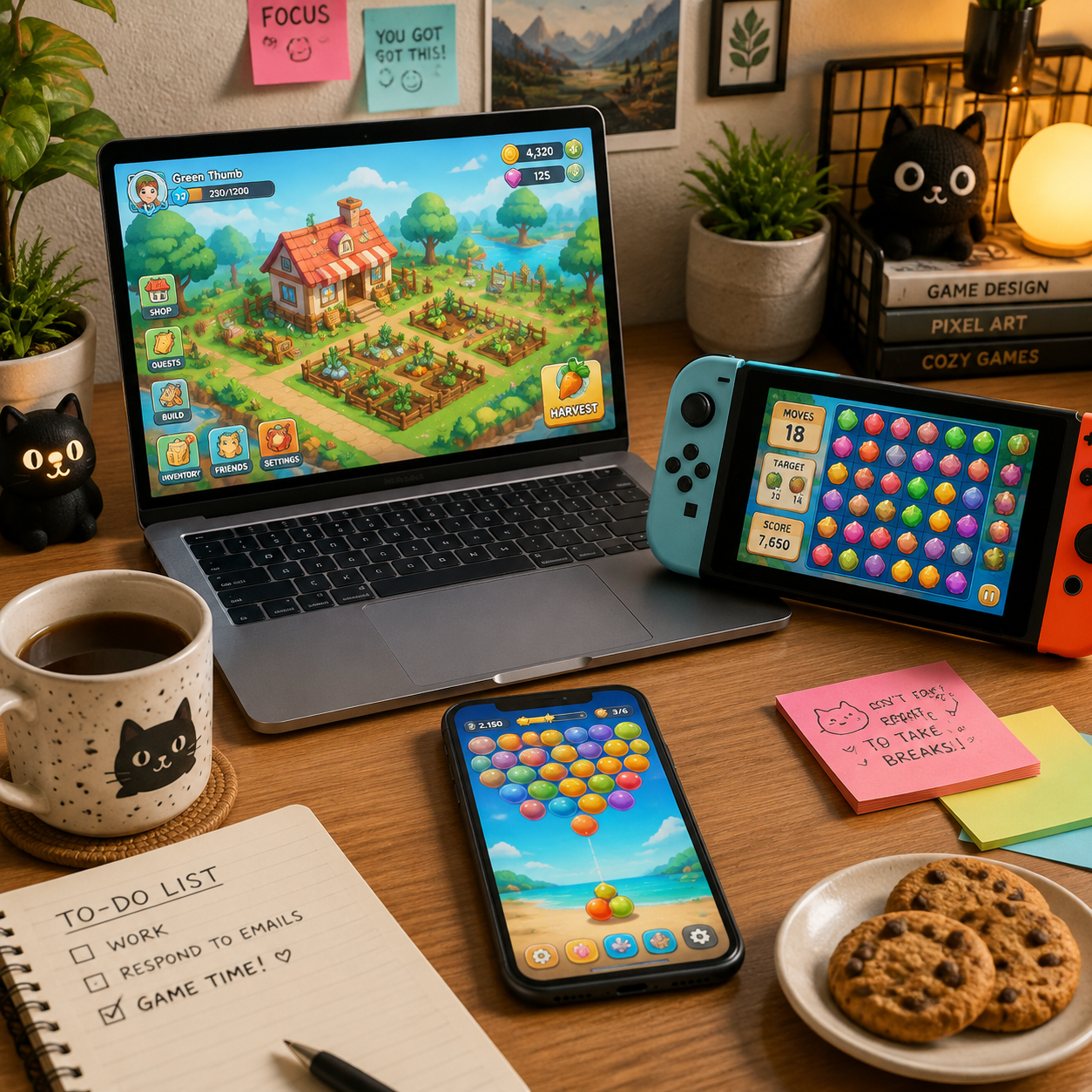
The best casual games for breaks are easy to start, simple to understand, and satisfying to stop after a few minutes. Whether you want a puzzle game on mobile, a browser game between tasks, or a quick multiplayer match after an esports session, the right choice depends on your time, device, and energy level.
This guide focuses on pick-up-and-play gameplay, clear stopping points, and short gaming sessions. The recommendations are grouped by break length, platform, and play style so you can choose quickly instead of spending your entire break browsing a game library.
What Makes a Great Break-Time Game?
A great break-time game offers quick sessions, simple controls, low commitment, easy pausing, and satisfying progress. It should deliver enjoyment within minutes without demanding a long tutorial, a ranked grind, or a perfectly uninterrupted block of time.
Look for these features when choosing casual games:
- Fast access: The game launches quickly and reaches its main activity without complicated setup.
- Simple controls: Touch controls, a mouse, or a few keyboard buttons should be enough to begin.
- Clear stopping points: A completed puzzle, round, level, or daily task gives you a natural exit.
- Flexible progress: You can make meaningful progress in five minutes, but continue playing when you have more time.
- Low penalty: Losing a round should feel harmless rather than forcing a long recovery or major setback.
A useful test is the three-minute rule: if you cannot reach the main gameplay within about three minutes, the title may be better suited to a planned gaming session. This does not mean every relaxing game must be instant. Slow-paced games can work well when they save automatically and let you pause without losing context.
Internet access also matters. Online multiplayer games can be excellent for social breaks, but connection problems, matchmaking queues, and unexpected overtime make them less predictable than offline puzzle games.
Best Casual Games for Five-Minute Breaks
For a five-minute break, choose games built around tiny rounds, individual puzzles, or repeatable challenges. The best formats include word puzzles, match-three games, arcade runs, and quick browser games that require almost no preparation.
Fast puzzle games
Wordle fits a short break because one puzzle usually takes only a few minutes and has a firm daily stopping point. Similar daily word games provide the same low-pressure routine, although their limited puzzle count can be a drawback if you want extended replayability.
Mini Metro offers compact strategy puzzles in which you connect stations and manage transport lines. A single attempt can be brief, but the game may encourage longer sessions as you refine a design. It suits players who want quiet concentration rather than reflexes.
Match-three games such as Bejeweled or other tile-matching titles are also reliable quick-play games. Their controls are immediately familiar, and individual moves take seconds. Watch for energy systems or intrusive advertising on free mobile versions, which can interrupt the flow of a short break.
Quick arcade and browser games
Crossy Road turns each attempt into a compact arcade challenge. You can play for less than five minutes, restart immediately, and stop after any run. Its simple tap-based movement makes it a strong mobile choice when your attention is divided.
Slither.io and similar browser games provide instant multiplayer action with minimal controls. They are easy to access on a PC or mobile browser, but online matches can become absorbing, so set a stopping limit before you begin.
For a browser-based break, check reputable portals that clearly identify game controls, privacy practices, and advertising. A browser game should be convenient, not a reason to install unknown software or grant unnecessary permissions.
Best Casual Games for Longer Breaks
For breaks of 15 to 30 minutes, choose casual games with flexible session lengths, light progression, and enough depth to remain interesting. These games let you complete a meaningful objective without requiring a full campaign or a long competitive commitment.
Relaxed progression
Stardew Valley works well when you have more time because an in-game day provides a natural unit of progress. Farming, fishing, mining, and relationship-building offer different levels of concentration. The trade-off is that one in-game day can take longer than a typical five-minute break, so it suits lunch breaks or evening downtime better than a quick pause.
Vampire Survivors delivers simple movement-based arcade gameplay with automatic attacks and short survival runs. You can learn the basics quickly, and each run creates a clear endpoint. Its escalating action is engaging, though players seeking a calm experience may find the later minutes intense.
Flexible strategy and simulation
Balatro combines poker-inspired scoring with deck-building decisions. Individual rounds can feel compact, but its strategic options create strong replayability. It is a good choice when you want a mental challenge without the mechanical demands of a traditional action game.
Slay the Spire is another strong option for a longer break. You build a deck while climbing a branching route, and each combat encounter has a distinct conclusion. Runs can last much longer than a break, so use its save-and-quit feature and leave at a map node when possible.
Cozy titles such as Unpacking offer a quieter alternative. Sorting objects into rooms creates progress without timers or combat. These games are especially suitable after a demanding work block, study session, or high-focus esports match.
Casual Games by Platform
The best casual game platform depends on your available hardware, control preference, and internet connection. Mobile games provide the fastest access, browser games remove installation barriers, and PC games generally offer deeper controls and more reliable long-session options.
- Mobile: Try Wordle, Crossy Road, Monument Valley, Mini Metro, and match-three puzzle games. Touch controls make them convenient, but small screens, battery use, and advertising can affect comfort.
- Browser: Word games, card games, chess puzzles, and lightweight arcade games work well when you cannot install software. Browser games are convenient on shared or work computers, but avoid sites with unclear downloads or aggressive pop-ups.
- PC: Vampire Survivors, Balatro, Mini Metro, and Slay the Spire offer precise mouse or keyboard controls with quick save options. A PC is ideal when you want more depth, although launching a client or managing updates can add friction.
- Console and handheld: Games such as Unpacking, Stardew Valley, Tetris Effect, and Animal Crossing provide accessible controls and comfortable play from a sofa or handheld device. Suspend features help, but battery life and game loading still matter.
Before choosing a mobile game, review its offline features and permission requests. The Federal Trade Commission’s privacy guidance explains why users should pay attention to the information apps collect, particularly when a simple puzzle game requests broad device access.
Casual Games by Play Style
Choose casual games by deciding what you want from the break: calm, concentration, quick action, social interaction, or light strategy. Matching the game to your mental state prevents a relaxing pause from becoming another stressful task.
- Relaxing: Unpacking, Monument Valley, Stardew Valley, and gentle simulation games provide low-pressure progress and soothing routines.
- Puzzle-focused: Wordle, Mini Metro, sudoku, nonograms, and match-three games reward attention without requiring fast reactions.
- Arcade: Crossy Road, Vampire Survivors, Tetris, and endless-runner games offer immediate action and repeatable attempts.
- Competitive: Quick chess puzzles, casual card games, and short online matches can provide a small challenge. Avoid ranked modes if losing rating would make the break stressful.
- Cooperative: Casual multiplayer games with shared objectives are enjoyable with friends, provided everyone agrees on the expected session length.
- Strategy-light: Balatro, Mini Metro, and turn-based card games give you meaningful decisions without the complexity of a full real-time strategy game.
How to Choose the Right Game for Your Break
To choose the right game for your break, match the title to your available minutes, concentration level, device, connection, and desired social intensity. A simple decision checklist can narrow the choice in under 30 seconds.
- Check the time: Choose a daily puzzle or arcade run for five minutes, a card game or simulation for 15 minutes, and a longer campaign only when your schedule is open.
- Measure your focus: Pick a match-three game or endless runner when tired; choose Balatro, chess puzzles, or Mini Metro when you want active problem-solving.
- Confirm access: Use offline mobile or PC games when the connection is unreliable. Select browser games when installation is impractical.
- Choose your pressure level: Select relaxing solo games after intense work. Use casual multiplayer games when you want conversation and light competition.
- Find the exit: Prefer games that save after a level, round, run, or turn. If the game has no obvious stopping point, set a timer before launching it.
This approach avoids a common mismatch: starting a high-focus competitive game during a two-minute pause, then returning to work more tense than before. The right game supports the break you actually have, not the break you wish you had.
Tips for Fitting Gaming Into Short Breaks
To fit gaming into short breaks, use games with clear stopping points, avoid long matchmaking queues, and decide your limit before starting. A small amount of planning protects the break from turning into an unplanned hour.
- Prefer rounds over endless feeds: A completed puzzle or finished run gives you a natural reason to stop.
- Skip lengthy queues: If matchmaking takes several minutes, choose a solo mode or an offline game instead.
- Set a visible timer: A 10-minute timer is useful when the game has continuous progression or frequent rewards.
- Disable unnecessary notifications: This keeps a short session focused and prevents other apps from extending it.
- Stop at a checkpoint: Save after a level, daily task, map node, or completed round rather than quitting mid-action.
Two mistakes cause most overruns. The first is choosing a game with variable match lengths when the break has a fixed end. The second is treating bonus rewards as mandatory; daily challenges and streaks can add pressure to an activity meant to refresh you. If a game repeatedly makes you late or distracted, replace it with a title that has firmer boundaries.
Frequently Asked Questions
What are the best casual games for a five-minute break?
Wordle, Crossy Road, match-three games, sudoku, quick chess puzzles, and short arcade runs are strong choices. They start quickly and provide individual puzzles or attempts that can end within minutes.
Which casual games work well on mobile or in a browser?
Mobile options include Wordle, Mini Metro, Crossy Road, Monument Valley, and match-three games. Browser choices include word games, card games, chess puzzles, and lightweight arcade titles that do not require installation.
Are casual multiplayer games suitable for short sessions?
Yes, provided the game has short rounds, fast matchmaking, and a reliable way to leave between matches. Casual multiplayer is less suitable when queues are unpredictable or matches commonly run beyond 20 minutes.
What casual games are relaxing rather than competitive?
Unpacking, Monument Valley, Stardew Valley, gentle simulation games, nonograms, and untimed puzzle games are generally relaxing. Their low-pressure structure lets you progress without rankings, timers, or direct opponents.
How can players avoid losing track of time during breaks?
Set a timer, choose a game with clear rounds, disable automatic next-match features, and stop at a save point. Avoid beginning a new match when only a few minutes remain before you need to return.